Luminous gardens
Luminous Gardens — Glowing Planting, Light Paths and Bio Lighting
The night garden as the main garden: glowing planters, grow-lit living walls, illuminated pathways and planting chosen for how it performs under coloured light.
Luminous Gardens
Designing the garden for after dark
Three layers that turn an ordinary garden into a luminous one. Treated together at the planning stage rather than added piecemeal, they cost less and last considerably longer.
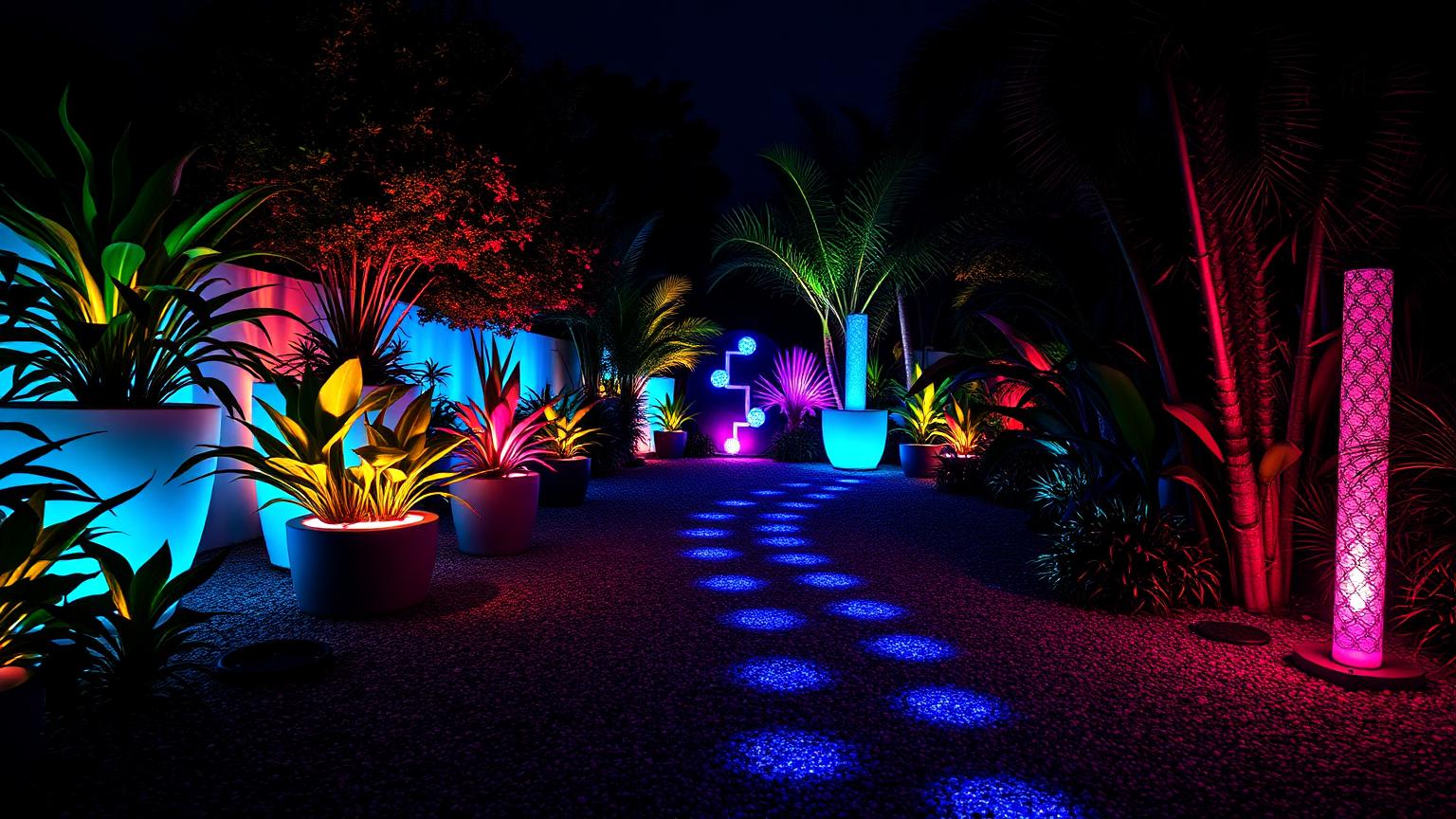
Illuminated planters do two jobs: they hold the planting and they light the space. Placed at the corners and turning points of a garden they draw the layout in light, so the shape of the space is legible at midnight.
Choose bold architectural foliage — strelitzia, dracaena, phormium, palms. Fine-textured planting disappears under coloured light, while strong leaf shapes throw the silhouettes that make these gardens work.
Prefabricated planter units with the light channel, drainage and wiring conduit cast in at the factory are increasingly preferred over site-built garden beds, because they arrive weatherproof and pre-tested, and can be positioned with a small crane or trolley rather than built up in wet trades on site.
Over time, the planting inside these units needs replacing on a longer cycle than the lighting itself, so access to the root zone without disturbing the light fitting is worth designing in from the start — a simple removable planting tray does this well.
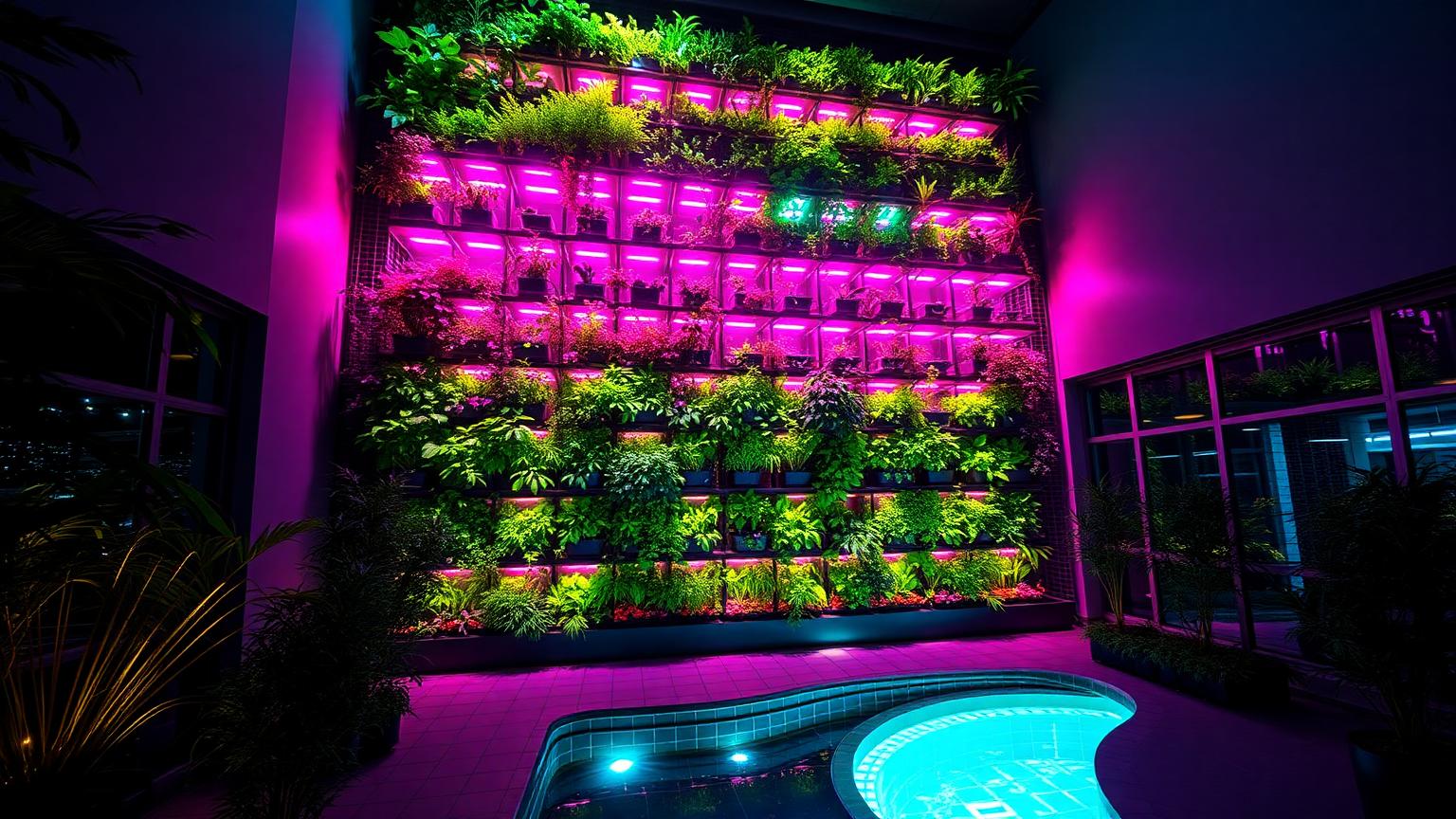
A hydroponic living wall lit with magenta-weighted grow LEDs is both a food and a feature system. The lighting that keeps the plants productive is exactly what makes the wall glow at night, which is a rare case of function and drama agreeing.
Plan drainage, a water point and a serviceable access route before the wall goes up. Living walls fail through maintenance access far more often than through planting choice.
Running cost is genuinely modest: grow LEDs are efficient by design, since horticultural lighting is optimised for the wavelengths plants use rather than for broad illumination, and a wall of this size sits comfortably within the output of a typical home solar array.
Irrigation is usually automated on a timer or moisture sensor feeding back to the same smart-home platform used elsewhere in the house, which turns a living wall from a demanding feature into one that mostly maintains itself between occasional pruning visits.
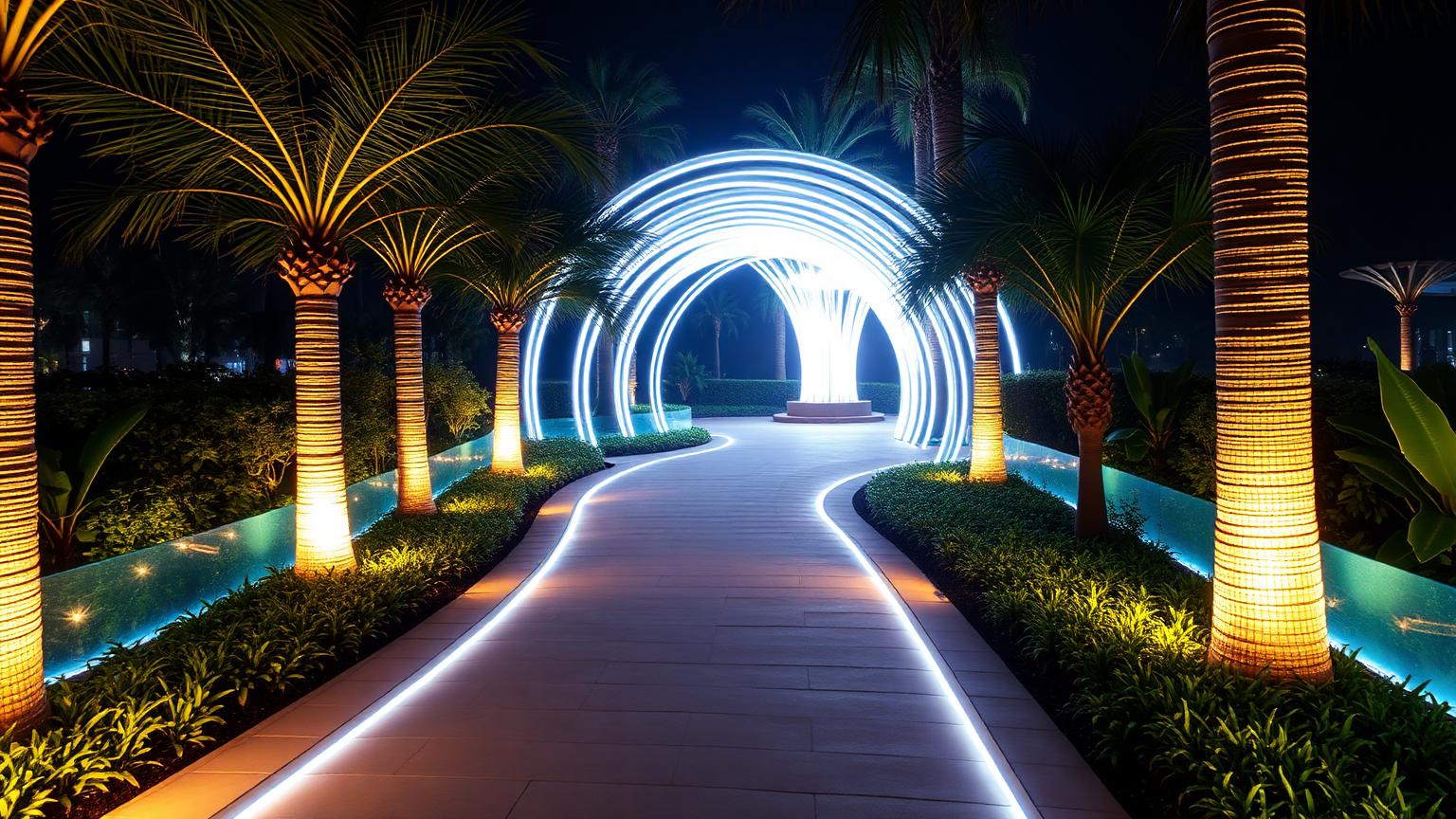
Linear LED cast into the paving edge gives a garden a sense of direction after dark and removes the need for spike lights that get knocked out of alignment every season.
Overhead, an arbour of light tubes creates a threshold moment — a tunnel of glow that separates one part of the garden from the next and gives the whole layout a sense of arrival.
Embedding the light channel into precast paving units at the factory, rather than routing a groove into paving already laid, produces a straighter, more even line and avoids the risk of cutting through existing conduit during installation.
Because these fittings sit at ground level and are walked over regularly, impact-rated lenses and a slightly recessed profile matter more here than almost anywhere else in the garden's lighting scheme — the fitting needs to survive foot traffic as reliably as it needs to glow.
The garden after dark
Designing the Garden as a Night Garden
Most gardens are still designed for a photograph taken at midday, then lit almost as an afterthought once the planting is in the ground. The luminous garden reverses that priority. Planting, hardscape and light are chosen together, with the understanding that a garden is used far more often in the evening than most planting schedules assume, and that after dark is when a future home's landscape does its most distinctive work.
This approach borrows directly from the broader shift toward integrated, energy-conscious design running through every part of the future home, applying the same discipline — plan the system, not the fitting — to soil and planting rather than concrete and steel.
A different design brief
Designing for night means selecting plants for their silhouette and leaf shape as much as their daytime colour, because fine, feathery foliage disappears under coloured light while bold, architectural leaves throw a strong shadow. It also means locating illuminated planters and light totems at the corners and turning points of a garden so its layout remains legible after sunset.
None of this needs to compromise how the garden looks by day. A well-chosen bold-leafed palette photographs just as well in sunlight as it glows at night, which is exactly why this planting language has spread quickly through future-facing gardens rather than staying a novelty.
Living walls and grow lighting
Hydroponic living walls lit with magenta-weighted grow LEDs are one of the more practical ideas in this space, because the lighting that keeps the plants productive is the same lighting that makes the wall glow after dark — a rare case where the feature and the function are the same system rather than competing budgets.
These walls need proper planning before installation: a dedicated water point, drainage that will not stain the surrounding paving, and a maintenance access route that does not require scaffolding every time a panel needs attention. Skipping this planning stage is the most common reason living walls fail within a year or two.
Materials and construction
Illuminated planters and light-embedded paving are increasingly prefabricated units rather than site-built features — a planter with the light channel, drainage and wiring conduit already cast in, delivered ready to place and connect. This produces a far more even, reliable glow than fittings retrofitted into an existing garden bed and shortens the landscaping program considerably.
Low-voltage cabling throughout the garden, run in conduit at construction stage rather than trenched in afterwards, keeps future maintenance simple and avoids the disturbance to established planting that retrofitted wiring inevitably causes.
Running on stored sunlight
A garden lit every night for years needs to be honest about its running cost, and the answer future gardens are settling on is the same one used elsewhere in the home: efficient LED fittings drawing from a battery charged by the home's own solar array during the day. Garden circuits are typically low draw, so they are often the easiest part of a home's lighting load to run entirely off-grid.
Control is handled from the same phone app that manages the rest of the house, with dusk sensors bringing the garden up automatically and scheduled dimming reducing both energy use and light spill into neighbouring properties later in the evening.
The garden as delivery infrastructure
As drone delivery becomes part of ordinary suburban life, gardens are starting to reserve space for it deliberately — a clear, well-lit landing pad away from overhanging branches, and a parcel drop hatch built into a garden wall or fence line so deliveries do not need to cross the main lawn or disturb the planting.
Looking ahead, expect luminous gardens to become largely self-tending as well as self-lit — soil sensors managing irrigation, automated pruning tools handling hedge lines, and the lighting layer simply one more system managed quietly in the background of a garden designed to be enjoyed rather than maintained.
Explore more topics
Future Home Design Topics, Concepts and Related Reading
Our other design websites