Smart and responsive homes
Smart and Responsive Homes — Automation, Sensors and AI Living
Homes that adjust their own light, shade, climate and garden — designed so the technology disappears into the architecture instead of cluttering it.
Responsive Living
Technology built into the architecture
Three areas where automation genuinely improves how a home feels, rather than just adding an app. In each, the electrical and structural planning has to happen well before the smart-home platform is chosen.
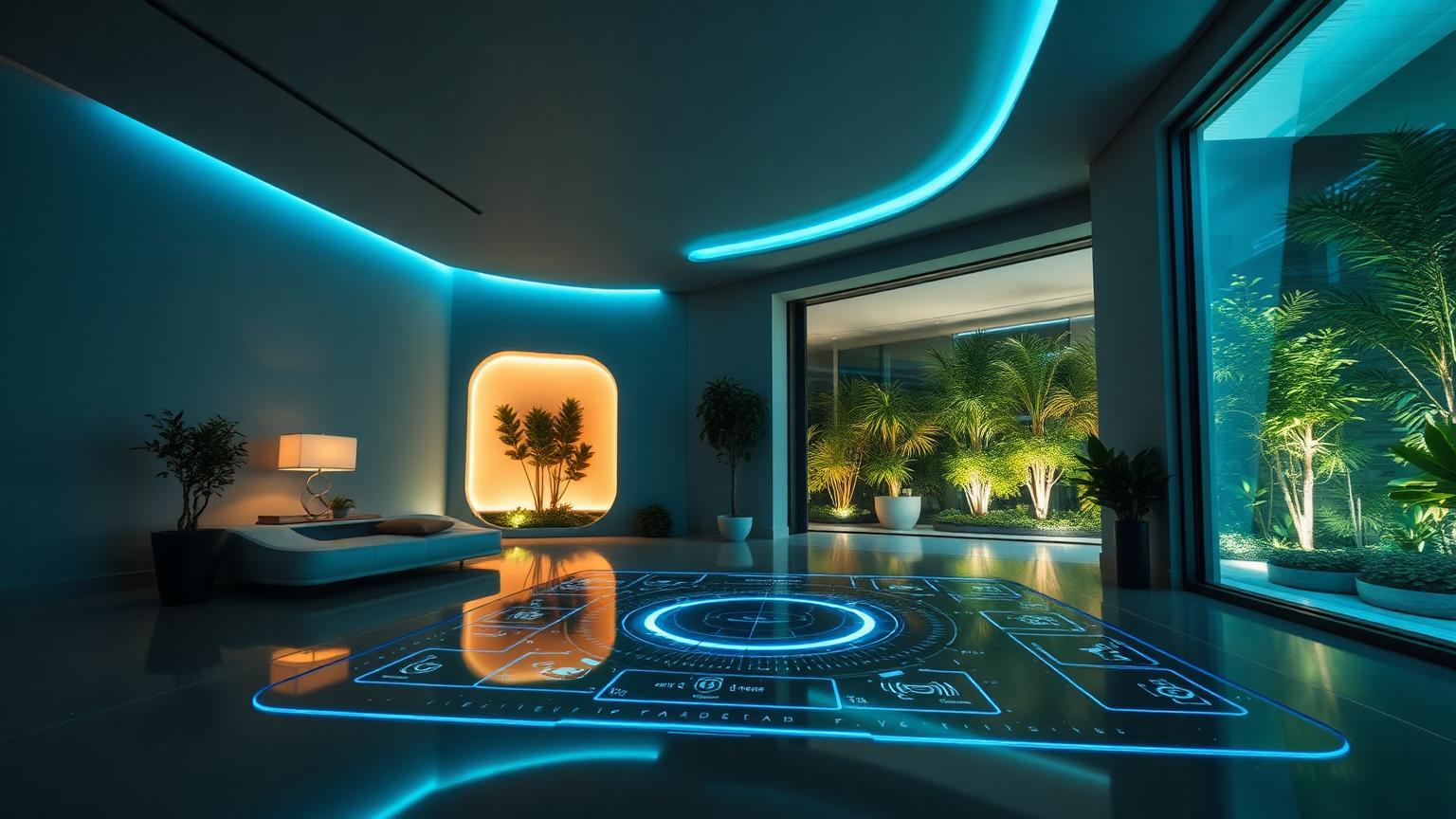
The best automation is the kind nobody operates. Presence sensors and daylight sensors driving a small set of scenes mean the house is already correct when you walk into a room, at any hour.
Keep a physical switch on every circuit. Homes that can only be controlled from a phone become frustrating the first time the network drops or a guest arrives.
Sensor placement is a design decision in itself — a presence sensor mounted where furniture will later block its view, or a daylight sensor positioned under a shading device, will behave unpredictably no matter how good the underlying software is, so sensor locations belong on the electrical plan, not decided on site.
A well-configured scene system typically needs a short commissioning period after handover, adjusting sensitivity and timing to how the household actually lives, which is worth budgeting for as part of the project rather than treating automation as finished the day the equipment is switched on.
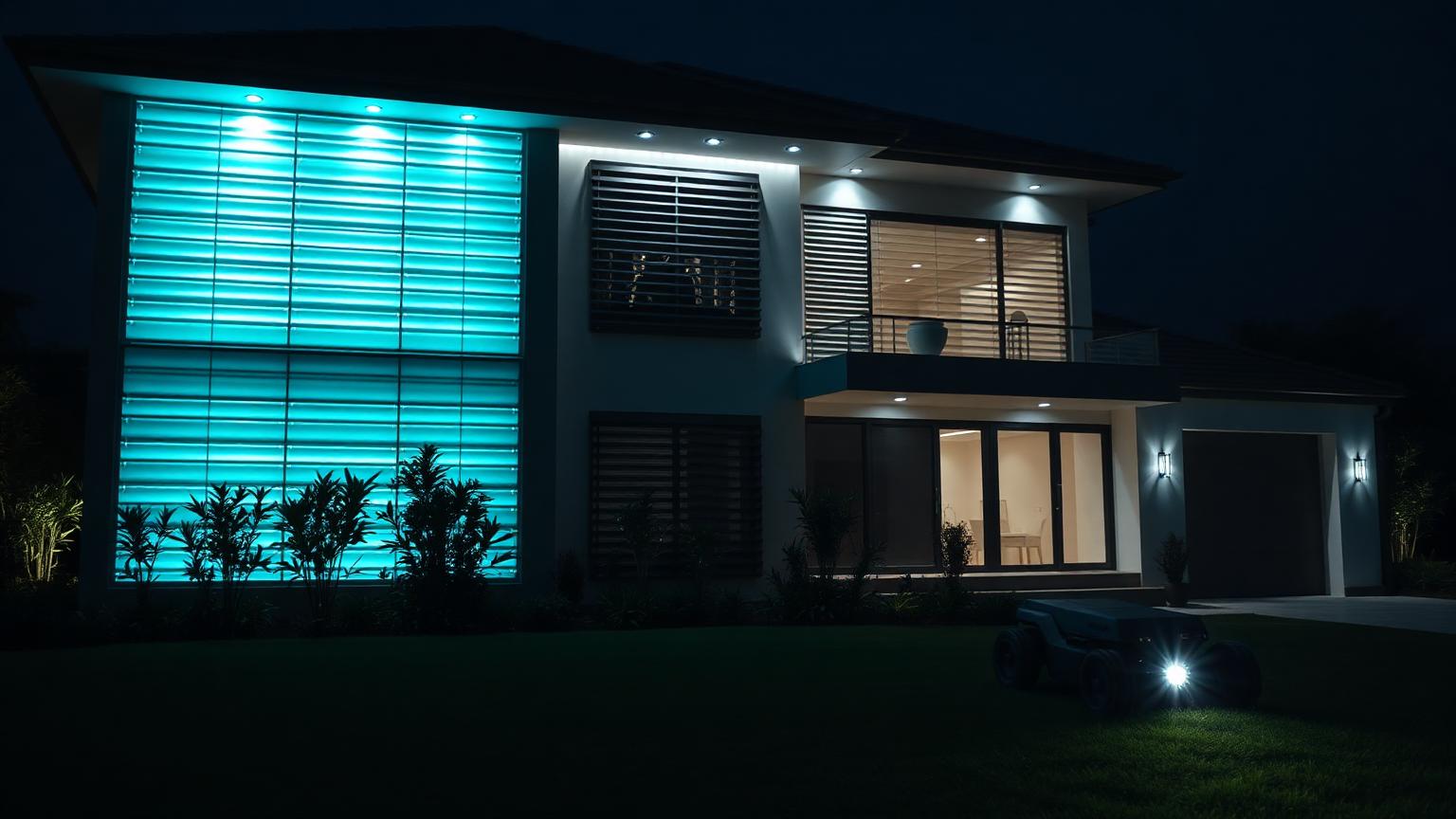
Motorised louvres and screens do the heavy lifting on comfort — tracking the sun through the day, cutting cooling load in summer and opening up for winter warmth, while doubling as a lit facade element at night.
Outside, robotic mowing and irrigation controlled by soil moisture keep a large landscape presentable without a maintenance crew, which is what makes ambitious garden designs sustainable long term.
These louvre systems are typically supplied as prefabricated cassettes with the motor, gearing and control wiring integrated at the factory, reducing the on-site work to fixing brackets and making a small number of connections, which shortens the installation program considerably compared with a site-assembled system.
Robotic garden equipment draws modestly on the home's own solar and battery system, charging during the day and operating on a schedule set through the same phone app used for the rest of the house, so the garden maintenance load barely registers against the household's overall energy use.
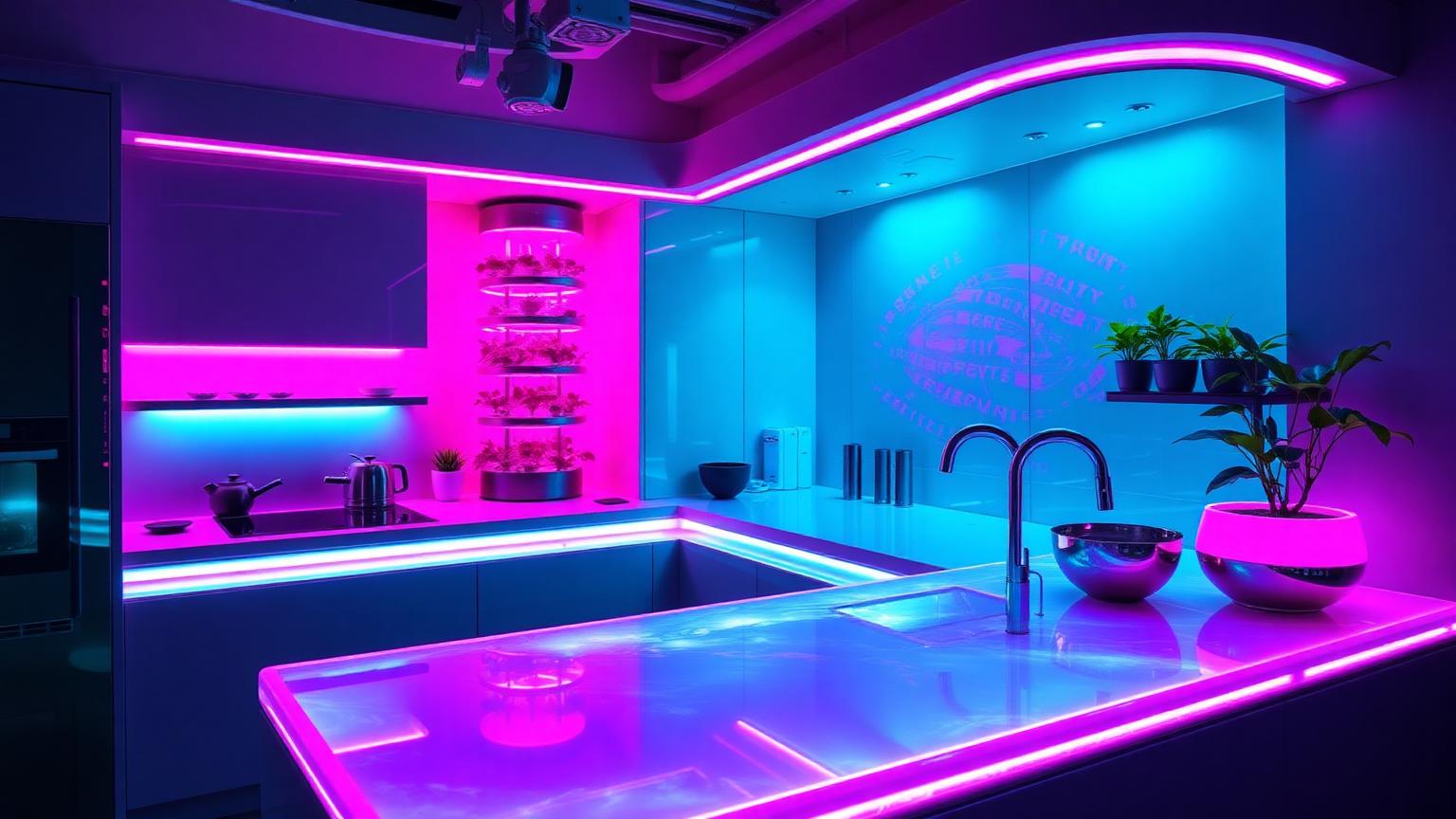
Integrated hydroponic towers put fresh produce into the kitchen and give the room a magenta glow that has become one of the signatures of a future home interior.
Backlit translucent stone and glass benchtops finish the effect: surfaces that provide the room's ambient light rather than needing to be lit themselves.
These growing towers are generally self-contained units with their own reservoir, pump and lighting controller, which means installation is closer to positioning an appliance than fitting a built-in system, and the same unit can be relocated if the kitchen layout changes later.
Backlit benchtops rely on a thin LED panel behind a translucent slab, and specifying the slab's thickness and translucency together with the lighting supplier at an early stage avoids the common problem of hot spots showing through an overly thick or unevenly veined stone.
The home that adjusts itself
Automation That Disappears Into the Architecture
The first generation of smart homes was defined by its interfaces — apps, hubs, remote controls stacked on a coffee table, each managing one small piece of the house. The next generation, already arriving, is defined by the opposite: automation so well integrated into the architecture that most of it is never consciously operated at all. Sensors, not switches, become the primary way a responsive home understands what its occupants need.
This matters because good automation and good sustainable design are, in practice, the same discipline. A house that adjusts its own shading, lighting and climate in response to the sun and the people inside it is also a house that wastes very little energy, which is exactly the outcome the rest of the future home movement is working toward from a materials and construction angle.
Sensors before switches
Presence and daylight sensors driving a small set of named scenes mean a room is already correct — lit appropriately, shaded appropriately — before anyone reaches for a control. This is a deliberate design decision, not a limitation of the technology: a house with too many scenes and too many manual options becomes a house nobody actually uses well.
Good practice keeps a physical switch on every circuit regardless of how sophisticated the sensor network becomes, because a home that can only be controlled through an app becomes frustrating the moment the network drops or a guest simply wants the light on.
Automated facades and shading
Motorised louvres and external screens that track the sun through the day do more for a home's comfort and running cost than almost any other single automated system — cutting cooling load through summer afternoons and opening to let winter sun in without anyone adjusting a blind. At night many of these same screens double as a lit facade element, folding the automation and the lighting design into one system.
These systems are increasingly delivered as prefabricated cassettes with the motor, sensor and control wiring integrated at the factory, which means the on-site work is limited to fixing and connecting rather than assembling from individual components — a shorter, more reliable installation than a site-built system allows.
Energy at the centre of the automation
A responsive home's automation is only as good as the energy system behind it. Rooftop solar feeding a home battery, managed by software that shifts heavy loads such as hot water and EV charging into the hours of peak generation, turns a smart home from a convenience into a genuine reduction in running cost.
The same control layer typically manages EV charging directly, prioritising stored solar over grid power and, in more advanced installations, allowing the car's battery to support the home during a short evening peak before overnight charging resumes.
Robotics in the garden and beyond
Automation is not confined to the building envelope. Robotic mowing and soil-moisture-triggered irrigation keep an ambitious landscape presentable without a standing maintenance crew, which is often what makes a more elaborate luminous garden practical for an ordinary household to actually own.
Indoors, integrated hydroponic growing systems are managed by the same sensor logic as the lighting and shading — nutrient dosing and grow-light scheduling handled automatically, with a phone notification only when something genuinely needs a person's attention.
What a responsive home does next
The logical extension of a home that already tracks presence, weather and energy is one that manages deliveries too — recognising an approaching delivery drone, illuminating a landing pad automatically, and unlocking a parcel hatch only for a verified courier before resealing it, all without anyone touching a screen.
Over the next fifty years, the direction is toward a home that requires decreasing input for correct behaviour: not more controls, but fewer decisions left for a person to make, freeing the architecture to simply respond well to the life happening inside it.
Explore more topics
Future Home Design Topics, Concepts and Related Reading
Our other design websites